


What We Offer
We specialize in a wide range of piercings, including:
-
Ear Piercings – Lobe, helix, tragus, conch, industrial & more
-
Facial Piercings – Nostril, septum, bridge, eyebrow
-
Oral Piercings – Lip, labret, Monroe, medusa, tongue
-
Body Piercings – Navel, nipple, surface, dermal
-
Intimate Piercings – Performed with professionalism, privacy, and care

PIERCINGS
At JuJu, we offer professional body piercing in a clean, safe, and welcoming environment. Whether you're getting your first piercing or adding to your collection, our experienced piercers use only high-quality, sterile equipment and jewelry to ensure a safe and comfortable experience.
Whether you're expressing your style, honoring a tradition, or marking a moment, we're here to help you do it safely and beautifully.
Book your appointment today or stop by for a consultation—walk-ins welcome!
PRICING
PIERCINGS
-
Both Earlobes.................................$50
-
Misc. Single Body Piercings..........$50
-
Each Additional Piercing................$25
-
Intimate Piercings.........................$100
*AFTERCARE IS NOT INCLUDED*
Online Deposit Range Between $10-$25 & Will Be Applied To Total Cost
AFTERCARE
-
Saline Spray.......................................$10
-
Tea Tree Spray...................................$15
MISC.
-
Specialty Jewelry Upgrade.......$5-$10
-
Jewelry Change/Clean.......................$5


Why Choose Us?
-
Certified, experienced piercers
-
Sterile, single-use needles (never piercing guns)
-
Implant-grade jewelry for safety and comfort
-
Aftercare guidance and support
-
Clean, licensed studio environment

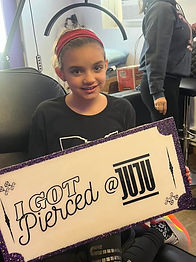
Brianna
"Amazing experience getting my baby girls ear pierced!! So much information towards what to go with and advice!!"
Andrea
"We had the BEST experience at JUJU thanks to Jamie! She did my daughter’s ear piercings and was absolutely AMAZING! Jamie was so patient, kind, and gentle — she made the whole process feel calm and comfortable, which meant the world to us."
Nadia
"Their staff was amazing really made my sister and I feel comfortable. I got my industrial and my doubles done and my sister ( got her basic lobe piercing done. They were clean and very kind! Highly recommend!"
PIERCING HEALING TIME
-
Lip Piercing Healing Times (Labret, Snakebites, Monroe, etc.): 2-3 Months
-
Male Genital Piercing Healing Times: 4 Weeks to 6+ Months
-
Nipple Piercing Healing Time: 9-12 Months
-
Nostril Piercing Healing Time: 2-3 Months
-
Oral Piercing Healing Times (Smiley, Frowney, Frenum & Tongue Piercings): 4-6 Weeks
-
Septum Piercing Healing Time: 6-8 Weeks
-
Belly Button Piercing Healing Time: 2–3 Months
-
Bridge Piercing Healing Time: 2-3 Months
-
Earlobe Piercing Healing Time: 4-6 Weeks
-
Eyebrow Piercing Healing Time: 2-3 Months
-
Female Genital Piercing Healing Times: 4 Weeks to 4 Months
-
Helix/Cartilage Piercing Healing Time: 3-6 Months Minimum, More Typically 6-9 Months

RULE #1: KEEP YOUR NEW PIERCING CLEAN
RULE #2: DO NOT PLAY WITH YOUR PIERCING
RULE #3: DO NOT CHANGE YOUR JEWELRY EARLY
If you want your new piercing to heal perfectly, you have to keep it clean. There are a couple ways to go about this. By best practices, neither method involves soap of any kind.
Ideally, you should spray your new piercing with an aftercare spray 3–6 times per day. If your piercing has an entry and exit point (e.g. an ear piercing or belly button piercing), be sure to spray both holes thoroughly. For something like a lip or cheek piercing, where one side of the fistula (i.e. the piercing hole) is external and the other side is internal, make sure to swish a saline oral rinse around your mouth for at least 30 seconds 3–6 times per day in addition to spraying the external side of your piercing with an aftercare spray.
Any time the skin around your piercing gets hot and irritated, it’s time to spray it again. You can never apply too much saline aftercare spray, but you could over-wash your piercing if you’re using soap. (Soap dries out the skin, so it can really irritate a healing wound of any kind when overused.)
At least twice a day, you should do more thorough sea salt solution soaks for new external piercings.
New piercings are highly susceptible to developing infection if bacteria is introduced. The easiest way to introduce bacteria is by touching your piercing. We know—it’s hard NOT to touch your new piercing. The piercing will feel foreign initially, plus you’ll be excited about it, and you’ll want to touch it. DON’T. If you have to touch your piercing, make sure you wash your hands with antibacterial soap first. Better yet, wear gloves.
If “crusties” form around your piercing, don’t worry, and don’t touch them with your bare hands. Crusties are just dried lymph, which is a clear fluid the body naturally excretes during the healing process that dries to a whitish crust. Piercers used to suggest turning, twisting, or sliding your body jewelry to break up crusties… but that’s not a good idea. You could transfer bacteria from your hands onto your jewelry and/or turn bacteria clinging to your jewelry into your delicate healing fistula. A much better solution for dealing with crusties is to soften them with sea salt solution or a piercing aftercare spray, and then gently wipe them away with a soft tissue. Always wash your hands first!
Jewelry is one of the best parts of getting a new piercing. There are so many gorgeous body jewelry options available to tempt you, and you should indulge… but not until your piercing is fully healed. Different piercings take different amounts of time to heal, and different people heal at different rates.
If you take out your jewelry too early, you may have trouble getting your new jewelry in on your own. If the fistula isn’t fully reinforced yet and you’re moving too slowly, your piercing may close before you can get the new jewelry into it. For that reason, it’s usually better to have a piercer change your jewelry for you the first time.
Whether or not a piercer helps you, the only time you should change your jewelry early is if you’re having problems with the piercing and think the jewelry’s material or length may be part of the problem.
RULE # 4: DEAL WITH PROBLEMS IMMEDIATELY
Various issues can arise in the early days after getting a new piercing. Unfortunately, a lot of clients fall victim to certain piercing myths.
Swelling: if the area of your body you’ve just had pierced swells excessively, your jewelry may begin to press uncomfortably into your skin. This is a problem you need to deal with immediately because prolonged pressure can cause necrosis (tissue death), which can lead to infection and/or cause you to lose your piercing. If you experience this issue, see your piercer right away and ask him or her to give you a longer barbell.
Tip: A captive bead ring makes great starter jewelry for many piercings, and it’s ideal because it leaves plenty of room for swelling. A captive ring is much less likely to put pressure on a swollen new piercing than many barbell styles. If you’re having your ear cartilage pierced, a labret stud is also a good choice, since that part of the body tends not to swell as much as fleshier areas do when pierced.
Allergic Reaction: if the skin around your piercing becomes excessively red, itchy, or excessively swollen, you may be allergic to your starter jewelry material. Surgical stainless steel and titanium are the two best metals for starter jewelry because they’re the most inert metals and least likely to trigger a reaction. (Typically people who have reactions are reacting to the high nickel content of cheaply-made jewelry.) BioPlast is another good hypo-allergenic alternative for people who have sensitive skin.
You may be able to avoid a full-on infection if you ramp up your sea salt solution application regime right when you begin to notice problems, but if your symptoms are severe or they persist, you should see a doctor right away. Don’t take infection lightly, particularly with oral and facial piercings.
If your doctor tells you to take out your piercing, don’t worry. As long as you keep your piercing clean while you take antibiotics, you should be able to keep it. It isn’t a good idea to take out jewelry while you have an infection anyway since bacteria could get trapped inside when the hole begins to close, which could potentially create an abscess.
OVERALL TIPS FOR A HEALTHY PIERCING
-
If you’re well, your piercing will be well.
-
Be hygienic overall.
-
Get plenty of sleep.
-
Avoid aspirin, at least early on (it’s a blood thinner).
-
Avoid alcohol and nicotine (these substances can slow the healing process).
-
Wear loose clothing if your piercing’s in an area where clothing may irritate it.
-
Protect your piercing (e.g. try not to sleep on it, catch your hairbrush in it, spray hairspray on it, etc)
SIGNS OF INFECTION
PIERCING BUMPS
Piercing bumps are small lumps that can appear after a piercing. They often occur following cartilage piercings, such as in the nose or upper ear.
Piercing bumps occur when the body’s immune system responds to the wound and initiates the healing response. This response leads to inflammation, which is what causes a bump.
A person may notice bleeding, bruising, and some swelling at the site of the piercing in the first few weeks after getting it. These symptoms are all typical. Other symptoms that are not typically a cause for concern may include:
-
itching
-
some whitish fluid coming from the site of the wound
-
crusting around the piercing jewelry.
Piercing bumps are part of the body’s natural response to injury, and they do not typically require treatment. However, people can take steps to keep the area clean, prevent infection, and allow the piercing to heal. These include:
-
keeping piercing jewelry in, without changing or removing it, for at least 6 weeks
-
washing the hands before touching the piercing
-
washing the piercing with a saline solution or gentle soap and water once a day
-
patting the area dry with a clean cotton pad after bathing or showering and avoiding using a towel, which can introduce bacteria
-
Thick, Yellow, Pus-Like Discharge
-
Red Streaks
-
Skin That’s Hot to the Touch
-
Fever
Hopefully this provides some decent guidelines for your healing process. Of course as with any healing wound, if you have questions or especially concerns with anything during the healing process, it’s very important to seek medical advice from your doctor to ensure your body is healing properly.